The Materials Science of Lithium-Ion Battery Recycling: Mining the Urban Mine
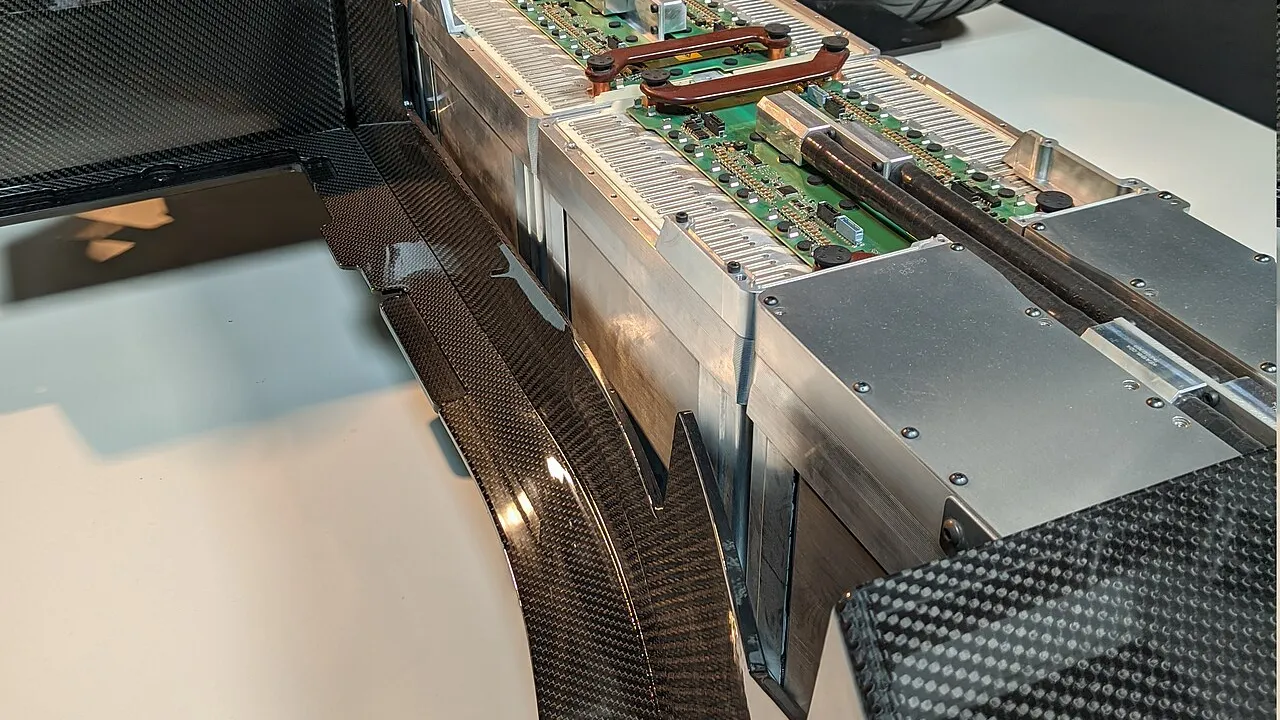
500,000 Tons at the Gate
By 2025, an estimated 500,000 tons of lithium-ion batteries will reach end-of-life globally, and that figure is expected to double before 2030. These batteries — from EVs, consumer electronics, and grid storage — contain valuable metals (Li, Co, Ni, Mn, Cu, Al), yet current recycling rates remain stubbornly low.
The bottleneck is not technology but economics. Virgin lithium from ore costs roughly $5–8/kg, while recycled lithium carries a net cost of $10–15/kg. Without higher metal prices or regulatory mandates, recyclers struggle to turn a profit.
Recycling vs. Mining: The Ledger
| Metric | Mining | Recycling |
|---|---|---|
| Lithium cost | $5–8/kg | $10–15/kg |
| Carbon emissions | High | 60–70% lower |
| Supply-chain risk | Geopolitical | Local |
| Metal recovery | — | Pyro < Hydro < Direct |
Recycling wins on environmental grounds — reduced mining, lower carbon — but the market does not price those externalities. The result is a paradox: everyone agrees recycling is necessary, but few recyclers are profitable.
Three Recycling Routes
Pyrometallurgy
Spent batteries are fed into furnaces above 1400°C. Organic electrolytes and binders burn off; Ni, Co, and Cu melt into an alloy. Simple and feed-tolerant, but Li and Al are lost to the slag. The cathode’s crystal structure is destroyed — this is mining substitution, not true circularity.
Hydrometallurgy
Acid leaching (typically H₂SO₄ + H₂O₂) dissolves metal ions from the black mass, followed by solvent extraction, precipitation, or electrochemical separation. Recovery rates are high (Li > 90%, Co/Ni > 95%) with lower energy than pyrometallurgy. The trade-off is large volumes of acidic wastewater and chemical consumption.
Direct Regeneration
The youngest and most materials-science-intensive route. The cathode’s crystal structure is preserved; lithium vacancies are replenished through hydrothermal, solid-state, or electrochemical relithiation. In principle, repaired LiFePO₄ or NMC particles can re-enter battery production directly. The catch: extreme sensitivity to feed purity — a mixed stream of chemistries breaks the process.
The LFP Problem: No Cobalt, No Value
LFP (lithium iron phosphate) contains no cobalt or nickel. Its cathode material has essentially no intrinsic metal value. The only recoverable fractions are copper foil, aluminum foil, and a modest amount of lithium. Recycling revenue is thin, but treatment costs and regulatory compliance are not.
The trend makes this worse: LFP’s share of the EV market is rising fast (>60% in China, heavy adoption by Tesla). As more LFP batteries retire, the recycling industry’s business model will only get harder. This is a structural risk that most of the ecosystem has not priced in.
The NMC Variability Challenge
NMC (nickel-manganese-cobalt oxide) stoichiometry keeps shifting: NMC-111 → 532 → 622 → 811. Each generation demands different leaching parameters, pH windows, and reducing-agent dosages.
| Variant | Ni:Mn:Co | Recycling Challenge |
|---|---|---|
| NMC-111 | 1:1:1 | Well-established |
| NMC-532 | 5:3:2 | Less cobalt, lower revenue |
| NMC-622 | 6:2:2 | Parameters need tuning |
| NMC-811 | 8:1:1 | Ni-rich, more Li needed |
The materials-scientist’s grand challenge: design a universal recycling process that can handle black mass containing a mixture of NMC generations — and even LFP — without requiring pre-sorting. Active research directions include selective leaching, deep eutectic solvents (DES), and machine-learning-assisted process optimization.
The Scale of the Problem
The 500,000-ton figure for 2025 is already conservative. Benchmark Mineral Intelligence projects 1.2 million tons of end-of-life Li-ion batteries by 2028 and over 3 million tons annually by 2035. The geographic distribution is uneven: China accounts for ~45% of retired batteries (driven by its dominant EV fleet), Europe ~25%, North America ~15%, and the rest of the world ~15%.
The sources are shifting dramatically. In 2020, consumer electronics (phones, laptops, power tools) supplied over 60% of end-of-life batteries. By 2027, EV batteries will account for more than 75% of retired capacity by weight, with a single EV pack (300–700 kg) equaling thousands of phone batteries. Grid storage batteries — still a small fraction today — will add another wave as 20-year utility assets begin retiring around 2035.
The material composition of this waste stream is also changing. Early retirements (2015–2020) were dominated by NMC-111 and LCO (lithium cobalt oxide). By 2030, the mix will include NMC-811, LFP, NCA, and emerging chemistries like LMFP and sodium-ion — each requiring different recycling parameters.
Pyrometallurgy in Practice
Pyrometallurgy is the oldest and most industrially mature route. Umicore’s plant in Hoboken, Belgium — operating since 2011 — processes over 7,000 tons of batteries annually in a shaft furnace at 1200–1450°C. The process is feed-tolerant: whole battery packs, modules, and cells go in without pre-sorting, and the organic components (electrolytes, separators, binders) serve as fuel. The output is a Co–Ni–Cu alloy sold back to the metals market.
Glencore’s Sudbury facility in Canada takes a different approach, co-processing batteries with nickel concentrates in its existing smelter, leveraging infrastructure built for primary mining. This avoids dedicated capital expenditure but means battery material is a minor fraction of the feed.
The energy cost is significant: pyrometallurgy consumes 8–12 MJ per kg of battery processed — roughly equivalent to burning 0.3 liters of diesel per kg. For a 500-kg EV pack, that is 150 liters of diesel equivalent in energy input. CO₂ emissions from the furnace alone add 3–5 kg CO₂ per kg of battery.
The fatal materials-science limitation: lithium and aluminum are lost to the slag phase. Umicore’s process recovers Co and Ni at >95% efficiency but recovers zero lithium — the slag ends up in construction aggregate. The cathode crystal structure is completely destroyed, making this a downcycling operation, not a circular one. Pyrometallurgy is mining substitution: it reduces the need for virgin ore but cannot supply battery-grade materials directly.
Hydrometallurgy in Practice
Hydrometallurgy operates at lower temperatures (60–90°C) but involves multiple chemical steps that demand careful process control.
Step 1 — Pretreatment: Spent batteries are discharged, dismantled, and shredded under inert atmosphere (N₂ or Ar) to prevent electrolyte combustion. The shredded material is sieved and density-separated into three fractions: copper/aluminum foils (coarse), separator plastic (light), and black mass (fine powder containing cathode and anode active materials). Black mass is the feedstock for leaching.
Step 2 — Leaching: The black mass is mixed with a lixiviant. The industrial standard is H₂SO₄ (2–4 M) with H₂O₂ (5–15 vol%) as a reducing agent, which converts Co(III) and Ni(III) to soluble Co(II) and Ni(II). Reaction conditions: 60–80°C, 2–4 hours, solid-to-liquid ratio of 100–200 g/L. Lithium dissolves as Li⁺ regardless. Leaching efficiency: Li > 99%, Ni > 98%, Co > 97%, Mn > 94%.
Alternate lixiviants exist: HCl is more aggressive (faster kinetics, room temperature possible) but generates corrosive Cl₂ gas; HNO₃ avoids chlorides but produces NOₓ fumes. Citric acid and malic acid have been demonstrated at lab scale as greener alternatives but are 5–10× slower.
Step 3 — Separation: After filtration, the pregnant leach solution (PLS) contains Li⁺, Ni²⁺, Co²⁺, Mn²⁺, Cu²⁺, Al³⁺, and Fe³⁺. Solvent extraction using D2EHPA (for Mn), Cyanex 272 (for Co), and LIX-84 (for Cu) separates metals sequentially. Each extraction stage achieves 90–95% purity; full separation requires 3–5 countercurrent stages per metal.
Step 4 — Recovery: Individual metal solutions are precipitated as carbonates (Li₂CO₃), hydroxides (Ni(OH)₂, Co(OH)₂), or oxalates, then calcined to battery-grade purity (99.5%+). Li₂CO₃ from recycling sells at a $2–4/kg discount to virgin material due to residual Al and F contamination from electrolyte breakdown.
The wastewater footprint is large: 10–15 liters of acidic effluent per kg of black mass processed, containing heavy metals, sulfate, sodium, and fluoride. Treatment through lime neutralization, sulfide precipitation, and reverse osmosis adds 15–25% to total processing cost. Companies like Li-Cycle (Ontario) and RecycLiCo (British Columbia) have proprietary process variations aimed at minimizing water consumption and eliminating solvent extraction through selective precipitation cascades.
Direct Regeneration in Detail
Direct regeneration is the only route that preserves the cathode’s crystal structure, making it the most materials-science-intensive — and potentially the most economical — approach. The core challenge: spent cathode particles have lithium vacancies, transition-metal migration into lithium sites, and surface reconstruction layers that impede lithium diffusion. Relithiation must undo all three.
Hydrothermal relithiation immerses spent cathode powder in a LiOH or Li₂CO₃ solution at 100–220°C under autogenous pressure (5–20 bar). Lithium ions intercalate back into vacant sites. For LFP, a single hydrothermal treatment at 180°C for 4 hours restores capacity from 80–90% of fresh material. For NMC, the process is more sensitive — excess Li can form Li₂O or Li₂CO₃ surface phases that increase impedance.
Solid-state relithiation mixes spent cathode with Li₂CO₃ or LiOH powder and calcines at 600–900°C. The solid-state reaction is simple and scalable (uses existing kiln infrastructure) but can cause particle sintering and grain growth that degrade rate performance. Optimization of temperature, ramp rate, and Li stoichiometry is critical.
Electrochemical relithiation charges spent cathode against a lithium metal or graphite counter-electrode in a fresh electrolyte. This is the gentlest method — it operates at room temperature and avoids high-temperature sintering — but it requires reassembling the cathode into a cell first, which is slow and batch-oriented. Currently limited to lab and pilot scale.
Companies active in this space:
- Battery Resources (Worcester, MA): Operates a hydrothermal direct-regeneration facility processing 5,000 tons/year of mixed cathode material. Claims 96% capacity restoration for LFP.
- Redwood Materials (Carson City, NV): Uses a combined pyrometallurgical-hydrometallurgical process but has invested heavily in direct-regeneration R&D for its second-generation process.
- Sicona (Australia): Focused on anode-side direct regeneration (silicon-graphite composites), a related but distinct challenge.
The largest remaining research questions: (1) How many cycles can directly regenerated particles survive before structural fatigue sets in? (2) Can the process handle a mixed-cathode feed without pre-sorting? (3) Does surface contamination from binder decomposition products (PVDF-derived HF) accelerate failure in regenerated cells?
The LFP Problem in Depth
LFP’s rise is the single greatest structural threat to the battery recycling business model. LFP contains zero cobalt and zero nickel — the two metals that drive recycling revenue. An NMC-111 battery contains roughly $45–55 of recoverable Co and Ni per kWh; an LFP battery contains $3–5 of recoverable metals per kWh (virtually all copper foil and lithium).
Yet LFP production is booming. In China, LFP accounted for 68% of EV battery installations in 2025, up from 35% in 2020. Tesla has committed to LFP for its standard-range vehicles globally. CATL’s Shenxing LFP batteries now achieve 400-km range with 10-minute fast charging, narrowing the performance gap with NMC. The IEA estimates LFP will hold 45–55% of the global EV battery market by 2030.
The economics of recycling LFP are inverted: treatment cost ($3–5/kg) exceeds revenue ($1–2/kg from Cu, Al, Li). Without regulatory mandates, no rational actor would recycle LFP — and yet millions of tons will enter the waste stream.
Three solution categories:
-
Policy intervention: Recycled-content mandates (see Policy Landscape below) force LFP recyclability by requiring minimum recycled lithium in new batteries regardless of chemistry. If every battery must contain 6–8% recycled Li (EU 2031 target), LFP recyclers gain a captive market. Europe’s proposed LFP-specific recycling credits go further, assigning a multiplier to LFP recycling volumes for compliance purposes.
-
Direct regeneration as the only viable path: Because LFP’s value is in the cathode structure, not the elements, hydrometallurgical breakdown destroys the only thing worth keeping. Direct regeneration — relithiating spent LFP particles — can restore capacity at a cost of $4–6/kg, creating a margin (vs. $3–5/kg treatment cost) only if the regenerated material sells at a premium. The remaining challenge is scaling the process to handle LFP’s high-volume, thin-margin reality.
-
Chemistry redesign: The industry is already responding. LMFP (lithium manganese iron phosphate) adds Mn to raise voltage from 3.4 V to 4.1 V, boosting energy density by 15–20% while keeping prices low. LMFP still contains no cobalt — and therefore faces the same recycling economics — but the higher energy density reduces end-of-life disposal cost per kWh, marginally improving the business case.
Policy Landscape
Regulation is reshaping recycling economics faster than any technology advance.
European Union — Battery Regulation (2023/1542):
- From August 2025: all batteries must carry a carbon-footprint declaration.
- From 2027: recycled-content minimums apply — 6% Co, 6% Li, 6% Ni recycled content in new batteries (for nickel not separately accounted later). These rise to 15% Co, 8% Li, 10% Ni by 2031, and 20% Co, 12% Li, 15% Ni by 2036.
- From 2027: 70% of all Li-ion batteries by weight must be collected; this rises to 85% by 2030.
- From 2031: recycling efficiency targets — 80% for Li-ion cells (up from 65% in 2026), with a separate 95% for Co, Ni, Cu and 70% for Li recovery.
- Noncompliance penalties can reach 5% of annual turnover.
The effect: by 2031, every battery sold in the EU must contain recycled material regardless of chemistry. This creates a guaranteed demand for recycled Li, Co, and Ni — and effectively subsidizes LFP recycling by forcing producers to buy recycled lithium from LFP recyclers.
United States — Inflation Reduction Act (2022) and Beyond:
- Section 45X tax credits: 10% of production cost for battery-grade recycled materials qualifies if they are processed in North America.
- The Bipartisan Infrastructure Law allocated $7 billion for battery supply-chain development, including $335 million specifically for recycling infrastructure.
- The US does not yet have recycled-content mandates comparable to the EU, but California’s SB 1215 (2023) requires battery producers to fund end-of-life collection and recycling, creating a de facto producer-responsibility framework.
China:
- Ministry of Industry and Information Technology (MIIT) mandates that battery manufacturers must register recycling channels and track batteries through a national traceability platform.
- Since 2018, China has designated 10,000+ collection points for retired EV batteries.
- Provincial subsidies for recycling infrastructure: Guangdong province offers ¥50,000–100,000 per ton of recycled battery capacity.
- The challenge in China is enforcement: an estimated 40–50% of retired batteries still enter informal channels, where they are either illegally dumped or processed by unlicensed recyclers with no environmental controls.
Other jurisdictions:
- South Korea’s Extended Producer Responsibility (EPR) system covers battery recycling, with fees adjusted by chemistry (higher for LFP to offset low intrinsic value).
- India’s Battery Waste Management Rules (2023) mandate 90% collection and 70% recycling efficiency by 2029.
- Japan’s Battery Recycling Act is under revision to add cobalt-specific recovery targets.
Emerging Recycling Technologies
Several materials-science innovations on the horizon could fundamentally change recycling economics.
Deep Eutectic Solvents (DES): Mixtures of hydrogen-bond donors (choline chloride, urea, ethylene glycol) and acceptors form room-temperature liquids that selectively dissolve metal oxides. Choline chloride–urea (reline) leaches Li from LFP at 50°C with >99% selectivity over Fe and PO₄ — meaning lithium can be extracted without dissolving the entire cathode. A 2024 study in Nature Sustainability demonstrated a choline chloride–ethylene glycol system that recovers Co, Ni, and Mn from NMC-622 in one step with 98% efficiency. DES avoids the toxic fumes and massive water volumes of acid leaching. The barrier to adoption: DES costs $8–15/kg (vs. $0.15/kg for H₂SO₄), and recovery of the DES itself for reuse is not yet demonstrated at scale.
Electrochemical Leaching: Instead of chemical reducing agents (H₂O₂, SO₂), electrons directly reduce transition metals at a cathode. The process generates zero chemical waste — the only consumables are electricity and water. A 2025 pilot by Mintalix (a MIT spin-out) processed 100 kg of NMC-811 black mass at 80% cathodic efficiency, recovering 97% Ni and treating the leachate in a flow-through electrochemical cell. Energy consumption: 4–6 kWh per kg black mass, comparable to acid leaching when accounting for chemical production. Voltage tuning allows selective extraction: at 2.5 V vs. Ag/AgCl, Cu and Al plate out first; at 1.5 V, Co and Ni follow. The challenge is electrode fouling — carbon from the anode active material contaminates the cathode surface, requiring periodic polarity reversal or ultrasonic cleaning.
Bioleaching: Certain microorganisms (Acidithiobacillus ferrooxidans, Aspergillus niger) produce organic acids or catalyze metal dissolution through enzymatic pathways. A 2023 study by BGR (Germany) demonstrated 85% Li and 92% Co recovery from spent NMC-111 using a mixed culture at 30°C over 14 days. Bioleaching is slow compared to chemical methods (days vs. hours) but operates at room temperature, atmospheric pressure, and produces negligible secondary waste. The limiting factor: bacterial sensitivity to toxic electrolyte residues and fluoride from PVDF binders. Strain engineering — genetic modification of A. ferrooxidans for higher fluoride tolerance — is an active research area at the University of Cambridge and UC Berkeley.
Magnetocaloric Separation: A novel approach exploiting the magnetic susceptibility difference between paramagnetic NMC particles and diamagnetic graphite. A high-gradient magnetic separator operating at 2–4 T can enrich NMC content from 60% to 95% in black mass, reducing the downstream chemical load. Pilot results from Recupyl (France) suggest this could be integrated as a preprocessing step before any recycling route, reducing acid consumption by 30–40%.
Microwave-Assisted Leaching: Microwaves heat the black mass selectively (carbon and transition metals are strong microwave absorbers), raising local temperatures to 200°C within seconds at the particle surface while the bulk solvent stays cool. Leaching times drop from 2 hours to 5–10 minutes. A 2025 techno-economic analysis from RWTH Aachen showed microwave leaching reduces energy cost by 35% compared to conventional acid leaching, but capital cost for the microwave reactors (€500,000–1 million per ton-hour of capacity) remains prohibitive. First commercial reactor planned for 2027 by Easymining (Sweden).
Outlook
The materials science of battery recycling is not a static problem. Cathode chemistry evolves, recycling economics shift, regulations tighten. The one constant is that the urban mine will not dig itself — and we are burying more lithium in landfills every year.
Related Posts
Five Bottlenecks Blocking 2D Semiconductors from the Fab
MoS₂, WS₂ and other 2D semiconductors promise to extend Moore's Law, but at least five industrialization bottlenecks stand between a lab-scale flake and a wafer-scale product.
The Materials Race in Carbon Capture: Amines, MOFs, and Zeolites
Carbon capture has been talked about for decades. The bottleneck is not engineering — it is materials chemistry.
The Real Bottleneck in Fusion Energy Isn't Plasma — It's Materials
Fusion reactors need materials that can withstand 150 million degrees and constant neutron bombardment. No known material can do this for long.