The Most Underestimated Bottleneck in Hydrogen Energy: Materials for Storage
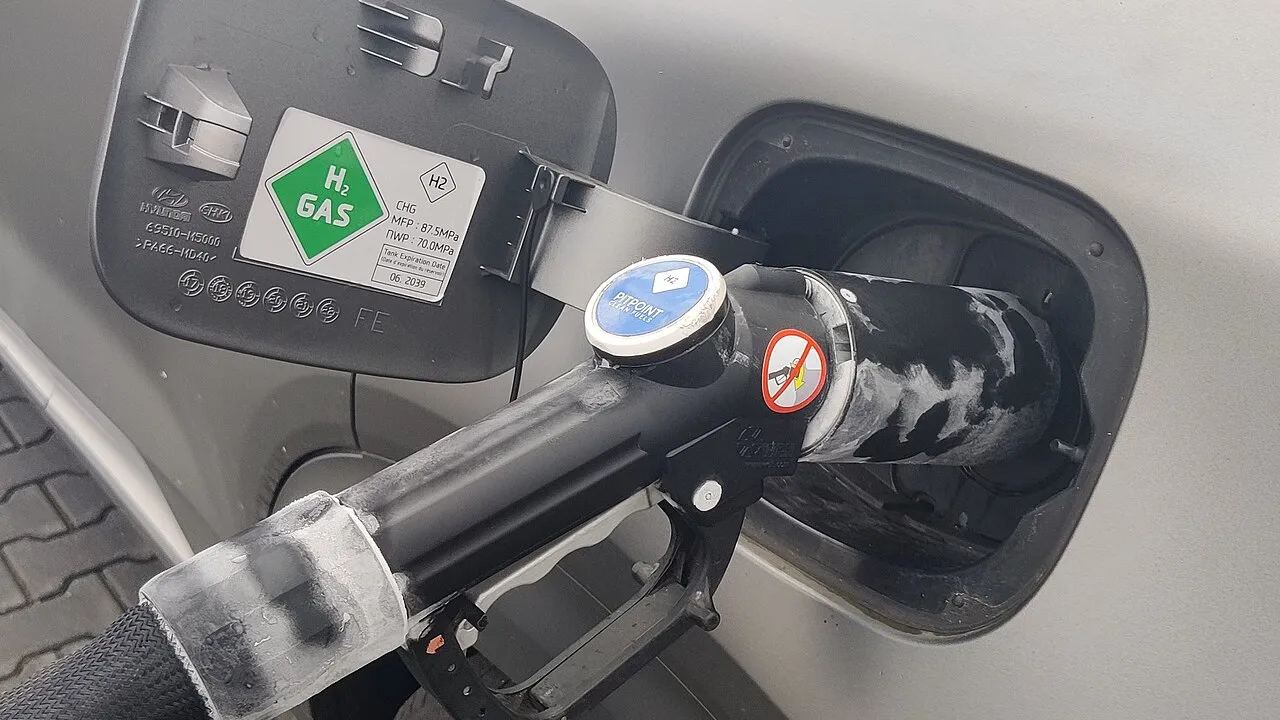
Hydrogen has been called the “ultimate clean fuel”—burn it, and the only byproduct is water. Its gravimetric energy density (120 MJ/kg) is nearly three times that of gasoline. But the hydrogen economy has a dirty secret that doesn’t make it into the promotional material: making hydrogen is no longer the hard part. Storing and transporting it is.
Electrolyzers now operate at over 80% efficiency. Proton-exchange membrane (PEM) electrolysis has reached commercial maturity. With solar and wind power driving down the cost of green electricity, green hydrogen production costs have fallen by roughly 50% over the past five years and continue to drop. The bottleneck has shifted downstream—to storage.
At standard temperature and pressure, one kilogram of hydrogen occupies about 11 cubic meters—roughly the volume of a small car. It is the lightest element in the universe, which is precisely the problem. To turn hydrogen into a practical energy carrier, you must somehow cram it into a much smaller space. Every method of doing so confronts the same reality: there is no storage material that simultaneously delivers high capacity, fast kinetics, low cost, long cycle life, and safety. That five-way tradeoff is the most underappreciated obstacle in the energy transition.
The Contradiction at the Heart of Hydrogen Energy
The hydrogen supply chain has three links: production, storage, and utilization. On the production side, green hydrogen (electrolysis powered by renewables), blue hydrogen (steam methane reforming with carbon capture), and emerging routes (photocatalysis, biological production) give the world multiple pathways to generate hydrogen at scale. On the utilization side, fuel-cell vehicles (Toyota Mirai, Hyundai Nexo), hydrogen-combustion engines, and stationary fuel-cell power plants have all been demonstrated commercially.
The missing link is storage.
Hydrogen’s volumetric energy density at atmospheric pressure is about 0.0108 MJ/L—compared with roughly 34 MJ/L for gasoline. That is a factor of more than 3,000. No matter how you store it—compressed, liquefied, or chemically bound—you pay a steep penalty in either energy, weight, or cost. And no single storage method delivers acceptable performance across all five key metrics simultaneously.
Compressed Hydrogen: 700 Bar and a Ton of Steel
The most straightforward approach is to compress hydrogen gas into a tank, the same way natural gas is stored. Natural gas pipelines operate at 200–250 bar. Hydrogen, because of its tiny molecular diameter (about 53 pm) and its tendency to leak through seals and diffuse into metals, requires far higher pressures—typically 350 to 700 bar (about 400 times car-tire pressure).
Type IV pressure vessels are the current state of the art. They use a high-density polyethylene (HDPE) liner to prevent hydrogen permeation and a carbon-fiber-reinforced polymer (CFRP) outer shell to handle the mechanical load. At 700 bar, a Type IV tank achieves about 5.7 wt% hydrogen—meaning hydrogen makes up 5.7% of the total system mass (tank plus hydrogen). Sounds reasonable, until you run the numbers: a system storing 5 kg of hydrogen (enough for about 500 km of driving in a fuel-cell car) weighs roughly 88 kg. That is comparable to the weight of a 80 kWh lithium-ion battery pack, but storing significantly less usable energy.
The deeper issues are cost and materials durability. Carbon fiber is energy-intensive to produce and expensive. The repeated pressurization–depressurization cycles at 700 bar induce fatigue between the polymer liner and the composite overwrap, and the bond can delaminate over time. More fundamentally, hydrogen’s tiny atomic radius allows it to diffuse through most polymers and, in metals, to cause hydrogen embrittlement—a phenomenon where atomic hydrogen recombines at grain boundaries, generating internal pressure that leads to stress cracking. Even high-strength steel alloys are not immune.
| Metric | Type III (Aluminum Liner) | Type IV (Polymer Liner) |
|---|---|---|
| Operating pressure | 350–700 bar | 350–700 bar |
| Gravimetric capacity | ~4 wt% | ~5.7 wt% |
| Cycle life | ~1,500 cycles | ~5,000 cycles |
| System cost | $15–20/kWh | $12–18/kWh |
| Main limitation | Hydrogen embrittlement | Carbon-fiber cost |
Liquid Hydrogen: -253°C and 30% Energy Loss
Liquefying hydrogen by cooling it to -253°C (20 K) shrinks its volume by a factor of about 800, yielding a density of 70.8 kg/m³ and a respectable volumetric energy density of roughly 8 MJ/L—about one quarter that of gasoline, but far better than compressed gas.
The catch is the energy cost of liquefaction. Cooling hydrogen from room temperature to 20 K requires 10–13 kWh per kilogram—roughly 30–40% of the hydrogen’s own energy content. Before you store a single kilogram, you have already burned about a third of its energy value.
Even after liquefaction, the hydrogen does not stay put. The temperature difference between the storage tank (20 K) and the ambient environment (~300 K) is nearly 280°C. No insulation is perfect, and heat leakage causes a portion of the liquid to boil off continuously. This phenomenon is called boil-off. For large stationary tanks, boil-off rates are about 0.1–0.3% per day. For smaller vehicle tanks, the rate can reach 1–3% per day. A car left unused for a week could lose a significant fraction of its fuel to the atmosphere—venting hydrogen, which is itself a climate concern.
Materials challenges in liquid hydrogen are extreme. At -253°C, most metals and polymers become brittle. Thermal contraction causes seals to fail. And liquid hydrogen’s extremely low viscosity makes it more prone to leaking through microscopic gaps than gaseous hydrogen. The aerospace industry (NASA, SpaceX) has decades of experience handling liquid hydrogen for rockets, but those are “use it or lose it” applications where cost per kilogram is secondary. For daily energy storage, the liquefaction energy penalty and continuous boil-off make liquid hydrogen difficult to justify.
Metal Hydrides: Safe but Heavy
Metal hydrides represent one of the most elegant ideas in hydrogen storage. Certain metals and alloys—magnesium, lanthanum-nickel (LaNi₅), titanium-iron (TiFe)—can absorb hydrogen into their crystal lattice under moderate pressure and temperature, forming stable chemical bonds. When heat is applied, the hydrogen is released.
MgH₂ (magnesium hydride) has one of the highest theoretical capacities among simple metal hydrides at 7.6 wt%. Magnesium is abundant and inexpensive. The problem is thermodynamics: the formation enthalpy (ΔH) of MgH₂ is about -75 kJ/mol H₂. To release the hydrogen, you must heat the material above 300°C. This is neither energy-efficient nor practical for most mobile applications.
LaNi₅H₆ sits at the opposite extreme. It absorbs hydrogen at room temperature under 2–3 bar and desorbs at about 1 bar—remarkably mild conditions. But its gravimetric capacity is only 1.4 wt%. To store 1 kg of hydrogen, you need more than 70 kg of the alloy. Lanthanum and nickel are also relatively expensive.
The central dilemma of metal hydrides is captured in three tradeoffs:
- Gravimetric capacity and desorption temperature are inversely correlated. High-capacity hydrides (MgH₂) need high temperatures; low-temperature hydrides (LaNi₅) have low capacity.
- Volume cycling. Repeated absorption and desorption causes the lattice to expand and contract by 10–25%, leading to pulverization after hundreds to thousands of cycles. The resulting fines clog gas pathways and increase system pressure drop.
- Thermal management. Absorption is exothermic; desorption is endothermic. Every metal-hydride system must incorporate heat exchangers to remove heat during filling and supply heat during discharge—adding weight, complexity, and cost.
| Material | Gravimetric Capacity | Desorption Temperature | Cycle Life |
|---|---|---|---|
| MgH₂ | 7.6 wt% | >300°C | ~1,000 cycles |
| LaNi₅H₆ | 1.4 wt% | 25–50°C | >10,000 cycles |
| TiFeH₂ | 1.9 wt% | 30–100°C | ~500 cycles |
| NaAlH₄ (complex hydride) | 5.6 wt% | 150–200°C | ~100 cycles |
Chemical Carriers: Binding Hydrogen to Another Molecule
If pure hydrogen is too difficult to handle, why not store it in a different chemical form? Chemical hydrogen storage binds hydrogen atoms to carrier molecules that are easy to transport, then releases the hydrogen on demand through a chemical reaction. The three most prominent carriers are ammonia (NH₃), methanol (CH₃OH), and liquid organic hydrogen carriers (LOHCs).
Ammonia (NH₃)
Ammonia contains 17.7 wt% hydrogen—higher than any metal hydride. It liquefies at moderate pressure (~10 bar at room temperature), is produced on a massive scale (about 180 million tonnes per year globally for fertilizer), and has an established transportation infrastructure. Ammonia can be burned directly as a fuel or cracked to release hydrogen.
The cost is the energy and complexity of the release step. Ammonia cracking requires temperatures of 400–600°C and a catalyst (typically ruthenium or nickel). Even trace amounts of residual ammonia (parts per million) poison proton-exchange membrane fuel cells, so the released hydrogen must be purified—adding yet another unit operation and further reducing efficiency. The well-to-wheel efficiency of the ammonia route (H₂ → NH₃ → H₂ → electricity) is roughly 35–40%. Moreover, ammonia is toxic.
Methanol (CH₃OH)
Methanol is synthesized from CO₂ and hydrogen (CO₂ + 3H₂ → CH₃OH + H₂O). When the methanol is burned or reformed, the CO₂ is released—but if the CO₂ was captured from the air, the cycle is carbon-neutral. Methanol is a liquid at room temperature and pressure, has an energy density of about 15.6 MJ/L (roughly half that of gasoline), and is fully compatible with existing liquid-fuel infrastructure.
The efficiency penalty is similar to ammonia: the round-trip efficiency of H₂ → CH₃OH → H₂ is about 35–40%. Methanol also requires high-temperature catalytic reforming (typically 250–350°C) to release hydrogen, with significant heat losses. Used directly in a methanol fuel cell, the efficiency improves, but direct methanol fuel cells have lower power density than hydrogen fuel cells and suffer from methanol crossover across the membrane.
LOHC (Liquid Organic Hydrogen Carriers)
LOHC systems work through reversible hydrogenation of aromatic compounds—typically dibenzyltoluene (HO-DBT) or dimethylphenazine. In the hydrogenated form (perhydro-dibenzyltoluene, H18-DBT), the liquid behaves like diesel: room-temperature liquid, non-toxic, non-flammable, transportable in standard tanker trucks and storage tanks. At the point of use, dehydrogenation at 270–310°C releases hydrogen, and the carrier molecule is returned for re-hydrogenation.
LOHCs offer the best infrastructure compatibility of any hydrogen storage method. They can use existing fuel-station networks. They do not evaporate, do not freeze, and do not explode. But they still face the fundamental efficiency penalty: dehydrogenation is endothermic and requires continuous heat input. The catalysts rely on platinum-group metals, raising cost. And the gravimetric capacity (about 6.2 wt% for H18-DBT on a carrier-only basis, lower when including the reactor system) is modest.
Efficiency Comparison
| Method | Hydrogen Content | Operating Conditions | Round-Trip Efficiency | Maturity |
|---|---|---|---|---|
| Compressed (700 bar) | ~5.7 wt% (system) | 700 bar / ambient | ~80% | Commercial |
| Liquid H₂ (-253°C) | ~14 wt% (system) | 1 bar / -253°C | ~55% | Aerospace |
| Metal hydride (MgH₂) | 7.6 wt% (material) | 1 bar / >300°C | ~90% (material) | Laboratory |
| Ammonia | 17.7 wt% | 10 bar / ambient | ~35–40% | Commercial |
| Methanol | 12.5 wt% | 1 bar / ambient | ~35–40% | Commercial |
| LOHC (H18-DBT) | ~6.2 wt% | 1 bar / ambient | ~40–45% | Demonstration |
The Fundamental Materials Quadrilateral
Why has no single storage material won after decades of research? Because the four desirable properties of a hydrogen storage material form an unsolvable quadrilateral:
- High capacity demands light elements (Mg, Al, B, N, C), but their hydrides are thermodynamically stable and require high desorption temperatures.
- Fast kinetics demands catalytic surfaces or nanostructures, which add cost and reduce volumetric capacity (the catalyst and the nano-scaffold take up space and weight).
- Favorable thermodynamics (reversible at near-ambient conditions) requires a metal–hydrogen bond strength in a narrow Goldilocks window—too weak and the material won’t absorb; too strong and it won’t release. This Goldilocks zone is almost exclusively occupied by alloys containing heavy transition metals, which drag down gravimetric capacity.
- Low cost demands earth-abundant elements (Fe, Mg, C), whose hydrides have middling performance on all other axes simultaneously.
This is a textbook multi-objective optimization problem, and no real material sits close enough to all four vertices. Nanostructuring—nanowires, nanoparticles, core–shell architectures—can tune kinetics and thermodynamics to some degree. For example, nanoconfined MgH₂ particles can lower the desorption onset from 300°C to roughly 200°C. But these gains come at the expense of cycle life (nanoparticles coarsen and agglomerate) and manufacturing cost (nanoscale processing adds steps and energy).
Nanoconfinement: Changing Thermodynamics Through Geometry
An emerging strategy for improving metal hydride performance is nanoconfinement — loading hydrogen storage materials into nanoporous scaffolds such as activated carbon, mesoporous silica (MCM-41, SBA-15), or metal-organic frameworks. The nanoscale confinement profoundly alters hydrogen sorption thermodynamics.
When MgH₂ particles are confined to pores with diameters below 10 nm, the high surface-to-volume ratio and altered lattice strain change the free energy landscape of the hydrogenation reaction. Desorption onset temperatures can drop from ~300°C to roughly 200°C, while absorption kinetics accelerate due to shorter diffusion path lengths. LiBH₄ nanoconfined in carbon aerogels has been shown to reversibly release hydrogen at temperatures consistent with PEM fuel cell waste heat recovery — a landmark result that was unthinkable for bulk LiBH₄.
The practical obstacle is that nanoconfinement adds process complexity and cost. The scaffold material occupies volume and mass that contributes nothing to hydrogen capacity, slightly reducing the already-modest system-level gravimetric density. And cycling stability remains a concern: repeated expansion and contraction of the confined particles degrades the scaffold over hundreds of cycles. Still, nanoconfinement represents one of the most promising laboratory strategies for bridging the gap between a material’s intrinsic thermodynamic floor and its usable operating window.
Computational Screening and the Materials Project
The search space for hydrogen storage materials is astronomically large. Theoretical structures can involve dozens of elements across hundreds of crystal symmetries — far too large to explore through trial-and-error synthesis. Computational materials screening, using density functional theory (DFT) and the Materials Project database, has emerged as the dominant discovery engine.
Modern screening pipelines calculate the enthalpy of hydrogenation, the gravimetric and volumetric capacity, and the thermodynamic plateau pressure for hundreds of hypothetical compounds in parallel. The U.S. Department of Energy’s HyMARC (Hydrogen Materials—Advanced Research Consortium) has used these pipelines to identify several complex hydride families — particularly borohydride-amide mixtures and reactive hydride composites — as promising candidates with capacities above 10 wt% and decomposition temperatures below 150°C.
Machine learning is accelerating the search further. Graph neural networks trained on DFT datasets can predict hydrogenation enthalpies for new compositions in milliseconds rather than hours, enabling the exploration of combinatorial spaces that were previously inaccessible. The most promising candidates are then synthesized and tested, closing the loop between prediction and experiment. This computational-first paradigm is rapidly becoming the standard approach for hydrogen storage materials discovery.
Ammonia Cracking: The Catalyst Problem in Chemical Storage
If ammonia is to serve as a practical hydrogen carrier, the ammonia cracking step must become faster, cheaper, and more efficient. The current industrial standard for ammonia decomposition uses ruthenium-based catalysts operating at 600°C or above — an expensive precious metal at high temperature. This combination kills the economic viability of ammonia as a fuel for distributed hydrogen production.
The materials science community has responded with several promising directions. Cobalt- and nickel-based bimetallic catalysts (Ni-Co, Co-Mo, Fe-Co) on oxide supports show ammonia conversion rates approaching ruthenium at significantly lower material cost. Alkali metal amide-imide systems (NaNH₂-MnN, Li₂NH-CaNH) act as both catalyst and nitrogen sponge, lowering cracking temperatures toward 400°C. And non-thermal plasma-assisted cracking can achieve high conversion at ambient temperature, though the energy input from the plasma still undermines net efficiency.
The practical target for distributed ammonia-to-hydrogen conversion is a catalyst that achieves over 90% ammonia conversion at below 500°C with negligible precious metal content and a lifetime exceeding 10,000 hours. No material currently meets all these criteria simultaneously, but the gap is closing. If the catalyst problem is solved, ammonia-based hydrogen distribution could become competitive with compressed or liquid hydrogen for maritime, rail, and stationary power applications.
Hydrogen features prominently in the national energy strategies of Japan, South Korea, Germany, and China. Yet in nearly every one, public R&D spending on hydrogen storage materials lags far behind spending on hydrogen production and fuel-cell technology. This imbalance is dangerous.
Without a storage breakthrough, hydrogen energy will remain trapped in a paradox: we can make it cleanly and cheaply, but we cannot deliver it to the end user efficiently. The materials problem is not an engineering detail to be solved later. It is the bottleneck.
The realistic path forward involves matching storage technology to application:
- Stationary storage (seasonal grid balancing): Metal hydrides and LOHCs are viable because weight does not matter and the heat for dehydrogenation can come from waste heat or the grid.
- Maritime and heavy trucking: Ammonia and methanol offer the best compromise of energy density, infrastructure compatibility, and cost—at the price of lower efficiency.
- Light-duty vehicles: Compressed hydrogen at 700 bar is the current default, but it is a stopgap. If a materials breakthrough comes, it will likely be in complex hydrides (borohydrides, alanates) or reversible chemical carriers operating near ambient conditions.
Hydrogen storage is not a problem that needs one perfect material. It is a problem that needs different materials for different scales, and a recognition that materials science is the limiting factor in the hydrogen economy—not electrolysis, not fuel cells, not policy.
This article is part of the “Energy Materials Bottlenecks” series. The next installment covers the solid–solid interfacial challenge in solid-state batteries.
Related Posts
The Materials Science of Solid-State Batteries: A Three-Way Tradeoff
Solid-state batteries promise safer, denser energy storage. But sulfide, oxide, and polymer electrolytes each face fundamental materials tradeoffs before mass production.
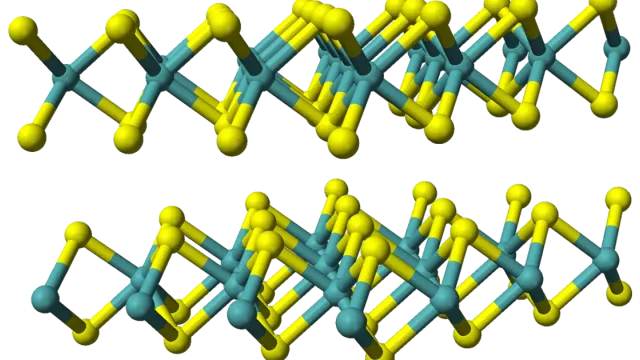
Five Bottlenecks Blocking 2D Semiconductors from the Fab
MoS₂, WS₂ and other 2D semiconductors promise to extend Moore's Law, but at least five industrialization bottlenecks stand between a lab-scale flake and a wafer-scale product.

The Materials Science of Lithium-Ion Battery Recycling: Mining the Urban Mine
Battery recycling is not optional — 500,000 tons of Li-ion batteries will retire by 2025. But pyrometallurgy, hydrometallurgy, and direct regeneration each face different materials challenges.