The Materials Science of Solid-State Batteries: A Three-Way Tradeoff
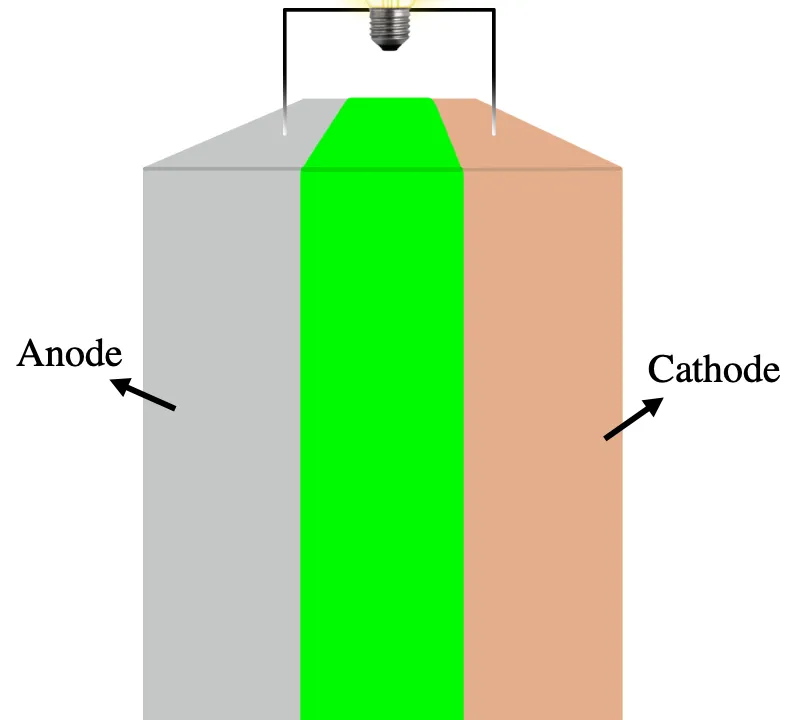
Solid-state batteries are often called the holy grail of energy storage—a potential leap in safety and energy density that could reshape everything from electric vehicles to grid storage. But behind the hype lies a classic materials-science dilemma: there is no single solid electrolyte that is fast, stable, and manufacturable at the same time. Every choice is a tradeoff.
The Limits of Liquid Electrolytes
Conventional lithium-ion batteries use a liquid electrolyte (a lithium salt dissolved in organic solvents), which delivers ionic conductivities above 10⁻² S/cm with excellent electrode wetting. Yet liquids bring well-known liabilities: they are flammable, prone to leakage, and allow lithium dendrites to pierce the separator and short-circuit the cell. Solid electrolytes replace the liquid with a rigid ionic conductor, in theory eliminating these failure modes. In practice, however, finding a solid that conducts ions as well as a liquid—while remaining chemically stable and scalable to manufacture—has proven one of the most stubborn challenges in modern materials science.
Sulfides: Fast but Fragile
The standout among sulfide solid electrolytes is LGPS (Li₁₀GeP₂S₁₂), discovered in 2011. Its room-temperature ionic conductivity reaches 12 mS/cm (1.2 × 10⁻² S/cm)—comparable to liquid electrolytes. This performance stems from the large ionic radius of sulfur (S²⁻) versus oxygen (O²⁻), which widens the lithium-ion transport channels in the crystal lattice.
Toyota has invested heavily in sulfides, announcing in 2023 that it had overcome key production hurdles and targeting 2027–2028 for its first solid-state EV. The company operates what is arguably the world’s most advanced sulfide-electrolyte pilot line.
The Achilles’ heel of sulfides is moisture sensitivity. Exposure to humid air triggers hydrolysis that releases hydrogen sulfide (H₂S)—toxic, flammable, and corrosive to electrode materials. Every step from synthesis to cell assembly must be performed in a dry room with a dew point below -60°C, drastically raising capital and operating costs. Moreover, sulfides oxidize at the high-voltage cathode interface, requiring protective coatings that add complexity and resistance. Solving this interfacial instability remains the single biggest engineering barrier to sulfide commercialization.
Oxides: Stable at the Cost of Resistance
Oxide electrolytes, typified by the garnet-type LLZO (Li₇La₃Zr₂O₁₂), offer a different tradeoff. With ionic conductivities in the range of 0.1 to 1 mS/cm (10⁻³–10⁻⁴ S/cm)—roughly one order of magnitude below sulfides—they lag in raw speed but excel in stability. LLZO is air-stable, non-toxic, and thermodynamically compatible with lithium metal, making it a strong candidate for anodeless cell designs.
QuantumScape has bet on LLZO. Its cell architecture uses a thin LLZO ceramic separator onto which lithium metal is plated during charging, eliminating the conventional graphite anode and boosting energy density above 400 Wh/kg in laboratory tests.
The critical challenge for oxides is solid–solid interfacial impedance. A liquid electrolyte wets the electrode surface intimately, forming a near-perfect ionic contact at the microscopic level. Two solids, by contrast, touch only at discrete asperities; the real contact area is a tiny fraction of the geometric area. The resulting interfacial resistance can be orders of magnitude higher than in liquid systems. Strategies to mitigate this include applying thin polymer interlayers or solder-like coatings, as QuantumScape does with its proprietary ceramic separator and a small amount of liquid wetting agent—a pragmatic compromise that blurs the line between “solid-state” and hybrid designs. Additionally, LLZO requires sintering temperatures above 1200°C and remains difficult to produce as large-area thin films.
Polymers: Scalable but Slow
Polymer electrolytes—most commonly based on polyethylene oxide (PEO) complexed with a lithium salt—were the first solid electrolytes studied and remain the easiest to manufacture. They are compatible with existing roll-to-roll coating lines, require no high-temperature sintering, and carry a fraction of the material cost of sulfides or oxides.
The price is low ionic conductivity. At room temperature, PEO-based electrolytes deliver about 10⁻⁵ to 10⁻⁴ S/cm—100 to 1,000 times slower than liquids. Ion transport in polymers relies on segmental motion of the polymer chains; below the glass-transition temperature, this motion essentially freezes. Heating to 60–80°C raises conductivity to a usable level, but that imposes a permanent thermal management requirement.
Blue Solutions, a French company, is the only manufacturer currently producing polymer-based solid-state batteries at commercial scale. Its batteries power Daimler’s eCitaro electric buses in several European cities—but the buses must remain plugged in to maintain operating temperature when not in use. For passenger cars, where cold starts and high power demands are routine, this is a non-starter. For stationary storage or always-warm industrial applications, however, polymer electrolytes remain a viable, cost-effective choice.
Why Hardness Alone Doesn’t Stop Lithium Dendrites
A solid electrolyte is often described as a “physical barrier” that blocks lithium dendrites, but the reality of dendrite propagation through solids defies this simple picture. Monolithic LLZO ceramic pellets with fracture toughness over 1 MPa·m½—higher than most engineering ceramics—can still fail under repeated lithium plating at current densities as low as 0.3 mA/cm². The failure mechanism is not bulk fracturing but grain-boundary penetration.
Solid electrolytes are polycrystalline. Individual grains are dense and mechanically rigid, but the boundaries between them—disordered regions a few nanometers wide—carry higher electronic conductivity than the grain interiors. Lithium ions that reach a grain boundary can reduce to metallic lithium within the boundary itself, nucleating a filament that grows along the grain-boundary network. Electron microscopy of failed LLZO pellets consistently shows lithium filaments threading along grain boundaries, bypassing the grains entirely.
This insight has redirected materials design away from monolithic hardness toward two alternative strategies: reducing the electronic conductivity of grain boundaries through doping (e.g., adding Al or Ta to LLZO to scavenge electronic carriers at boundaries), and eliminating grain boundaries altogether through single-crystal electrolyte growth. Single-crystal LLZO has demonstrated critical current densities an order of magnitude higher than polycrystalline samples of identical composition. The tradeoff is that growing meter-scale single crystals for commercial cells is not manufacturable at relevant cost, leaving doping as the nearer-term engineering path.
Comparing the Three Routes
| Electrolyte Type | Ionic Conductivity (S/cm) | Stability | Manufacturing Difficulty | Key Players |
|---|---|---|---|---|
| Sulfide (LGPS) | 10⁻² | Poor (moisture-sensitive) | High | Toyota, Samsung |
| Oxide (LLZO) | 10⁻³–10⁻⁴ | Excellent | High | QuantumScape, ProLogium |
| Polymer (PEO) | 10⁻⁴–10⁻⁵ (RT) | Moderate | Low | Blue Solutions |
The Interface Engineering Challenge
Replacing a liquid with a solid creates problems that simply do not exist in conventional cells. At every interface—cathode–electrolyte, electrolyte–anode, and grain boundary within the electrolyte itself—lithium ions must cross from one crystalline lattice into another. When these lattices differ in crystal structure and electronic potential, a space charge layer forms: a thin region of lithium depletion or accumulation that adds a resistive barrier to ion transport. This phenomenon is poorly understood even in well-studied oxide systems and is essentially unmapped for many sulfide candidates.
Protective coatings have emerged as the dominant mitigation strategy. A nanoscale layer of LiNbO₃, LiTaO₃, or Li₂ZrO₃ deposited on the cathode particle surface acts as a buffer, suppressing side reactions between the sulfide electrolyte and high-voltage cathode materials. Atomic layer deposition (ALD) is the preferred coating technique because it produces conformal, pinhole-free films just 5–20 nm thick. However, ALD is slow and expensive—a single kilogram of coated cathode material can cost ten times more than the uncoated equivalent.
On the anode side, lithium metal presents its own interface challenges. Most solid electrolytes are not thermodynamically stable against lithium; even LLZO, which is considered compatible, forms a thin interphase of tetragonal LLZO or Li₂CO₃ on the surface. More critically, voids form at the lithium–solid interface during stripping, and during plating these voids concentrate current into hotspots that can crack the solid electrolyte. Maintaining a moderate stack pressure (typically 5–10 MPa) is essential to keep the interface in contact, adding mechanical complexity to the cell design.
Anode-Free Solid-State Batteries
One of the most exciting architectural innovations in solid-state battery research is the anode-free (or anodeless) design. In a conventional lithium-ion battery, the anode (typically graphite or silicon) acts as a host structure that stores lithium ions during charging. An anode-free cell eliminates this host entirely: lithium plates directly onto the copper current collector during charging and is stripped back to the cathode during discharging.
The advantage is dramatic. Without a thick anode layer, the cell is thinner, lighter, and cheaper to produce. Energy density can exceed 450 Wh/kg at the cell level—well beyond the ~300 Wh/kg of today’s best lithium-ion cells. The anode-free design also pairs naturally with solid electrolytes, which can serve as both separator and mechanical barrier against dendrite penetration.
QuantumScape has demonstrated anode-free cells with its LLZO-based separator, achieving over 800 cycles with >80% capacity retention. Samsung SDI has also published promising results using a silver-carbon composite interlayer between the solid electrolyte and the copper current collector, which guides uniform lithium nucleation during the first plating cycle.
The primary barrier to anode-free adoption is Coulombic efficiency. If even 1% of the plated lithium is lost each cycle (to side reactions or dead lithium formation), the cell capacity declines too fast for practical use. Sustaining >99.9% Coulombic efficiency over thousands of cycles is the benchmark, and only the best solid-electrolyte systems have reached this threshold in lab settings.
Key Players and Commercialization Timelines
Several companies have announced production timelines for solid-state batteries. The table below summarizes the major contenders and their chosen approaches.
| Company | Electrolyte Type | Architecture | Stated Energy Density | Target Production | Latest Status |
|---|---|---|---|---|---|
| Toyota | Sulfide | Pouch cell | ~400 Wh/kg | 2027–2028 | Pilot line operational; prototype EV in 2025 |
| QuantumScape | Oxide (LLZO) | Anode-free pouch | >400 Wh/kg | 2025–2026 (low volume) | 24-layer cells tested; automotive qualification underway |
| Samsung SDI | Sulfide | Ag-C composite anode | ~400 Wh/kg | 2027 | Prototype cells; R&D milestone reached in 2024 |
| Solid Power | Sulfide | Pouch cell with Si anode | 390 Wh/kg | 2026 | 20 Ah cells delivered to BMW and Ford |
| ProLogium | Oxide (LLZO + composite) | Large-format pouch | 380 Wh/kg | 2024 (pilot) | Gen 1 in pilot; Gen 2 with full LLZO planned for 2026 |
| Blue Solutions | Polymer | Monopolar pouch | ~250 Wh/kg | In production | Commercial; eCitaro bus fleet |
| Factorial Energy | Polymer + quasi-solid | FEST platform | 350+ Wh/kg | 2024–2025 | 40 Ah cells shipped to OEM partners |
Timelines have slipped repeatedly across the industry—every company on this list has pushed back its original target by at least one to two years. Solid-state manufacturing at scale remains the root cause of delay, not fundamental science.
The Chinese Solid-State Battery Race
While Toyota and Samsung have dominated international headlines, China’s solid-state battery development has accelerated on a parallel track, backed by aggressive government funding and an integrated supply chain that spans lithium extraction, electrolyte synthesis, and cell manufacturing—all under domestic control.
CATL (Contemporary Amperex Technology Co. Limited), the world’s largest battery manufacturer, has disclosed work on what it calls a “condensed-state battery”—a lithium metal design with a semi-solid electrolyte whose composition has not been publicly detailed. CATL claims an energy density of 500 Wh/kg at the cell level, with aviation applications as the initial target before scaling to automotive volumes. A production timeline has not been announced, though the company has stated it is targeting commercialization within three to five years.
BYD, the largest EV manufacturer globally, has adopted a dual-track strategy. Its FinDreams battery subsidiary is developing both sulfide all-solid electrolytes and an oxide-polymer composite semi-solid intermediate, hedging against the risk that all-solid cells may not reach cost parity with LFP (lithium iron phosphate) blade batteries—BYD’s dominant platform—for another decade. BYD has been characteristically quiet about its solid-state roadmap, but patent filings show active work on LLZO synthesis and sulfide electrolyte coating processes.
The most aggressive Chinese timeline belongs to Qingtao Energy (清陶能源), a spinout from Tsinghua University. Qingtao completed a semi-solid battery production line in Kunshan with an annual capacity of 1 GWh in 2022, and its cells have been integrated into vehicles from SAIC and NIO. Qingtao’s all-solid-state target is 2027, using an oxide-sulfide composite electrolyte with a lithium metal anode.
WeLion (Beijing Weilan New Energy Technology), NIO’s semi-solid partner, operates a production line in Huzhou with 2 GWh annual capacity. WeLion uses a composite solid-liquid electrolyte with oxide ceramic fillers and has disclosed energy densities of 360 Wh/kg for its current generation.
The Chinese advantage is structural: sulfide precursor production, lithium foil manufacturing, and dry-room infrastructure all benefit from China’s dominance in upstream lithium processing and equipment manufacturing. If any country can solve solid-state manufacturing at scale through brute capital deployment, it is likely China—but the fundamental materials tradeoffs described in this article apply regardless of geography.
Manufacturing Challenges: Synthesizing Solid Electrolytes
Moving solid-state batteries from the lab bench to the factory floor requires solving synthesis problems that are unique to each electrolyte family.
Sulfides are typically synthesized by mechanical ball-milling of Li₂S, P₂S₅, and GeS₂ powders, followed by a low-temperature annealing step (400–550°C). The entire process must operate under a dry argon atmosphere because even trace moisture degrades the product. Reactant Li₂S itself is expensive (up to $1,000/kg at research scale) and poses handling hazards. Several companies are working on solvent-based synthesis routes that could leverage existing lithium-ion battery manufacturing infrastructure, but finding a solvent that dissolves sulfide precursors without reacting with them has proven difficult.
Oxides require the opposite extreme: high-temperature solid-state reactions at 1000–1300°C, followed by sintering to densify the ceramic and reduce grain-boundary resistance. The high sintering temperature makes co-sintering with cathode materials nearly impossible—the cathode degrades long before the electrolyte reaches full density. Tape casting and hot pressing can produce thin LLZO sheets (down to 30 µm), but the yield of pinhole-free large-area films remains low.
Polymers are the most manufacturable. A PEO–lithium salt mixture can be dissolved in acetonitrile, cast onto a carrier film using a slot-die coater, and dried in-line—a process essentially identical to making a lithium-ion battery separator. The challenge lies not in making the electrolyte but in integrating it with thick electrodes, where the poor ionic conductivity of the polymer limits the electrode thickness and thus the cell energy density.
The Role of Computational Materials Science
The materials-science community has begun applying high-throughput computation and machine learning to accelerate electrolyte discovery. Density functional theory (DFT) calculations can screen thousands of hypothetical crystal structures for lithium-ion migration barriers, predicting conductivity before any material is synthesized.
The Materials Project (materialsproject.org) hosts computed properties for over 150,000 inorganic compounds, including calculated lithium migration barriers for many candidate electrolytes. Machine-learning models trained on these data can identify promising compositions with conductivities that would have taken years to discover by trial and error. In one notable example, researchers at the University of Michigan used a combination of DFT screening and experimental validation to identify a new family of lithium-ion conductors based on the LISICON structure that had been overlooked for decades.
Generative AI models are now being applied to propose entirely new crystal structures optimized for superionic conduction. While no computationally discovered electrolyte has yet reached commercial production, computational screening has already reduced the experimental search space from tens of thousands of candidates to a few hundred, dramatically accelerating the R&D cycle.
Semi-Solid Batteries as a Transitional Technology
Pure solid-state batteries may still be five to ten years away from mass production. In the meantime, a class of semi-solid batteries has emerged as a bridge between conventional lithium-ion and full solid-state technology.
Semi-solid batteries retain a small amount of liquid electrolyte or a gel polymer inside the cell to wet the electrode–electrolyte interfaces, solving the solid–solid contact problem while preserving most of the safety and energy-density advantages of an all-solid design. The terminology can be confusing—companies use labels such as quasi-solid, hybrid solid, or solid-state when they are technically semi-solid.
Two Chinese firms have defined the semi-solid frontier on opposite sides of the engineering spectrum. Ganfeng Lithium, the world’s largest lithium compound producer by market capitalization, pursued a hybrid electrolyte approach: a composite separator that suspends oxide particles in a polymer matrix, infiltrated with a gel electrolyte that occupies roughly 10% of the cell volume. Ganfeng’s first-generation semi-solid pack, installed in the Seres 5 SUV since 2023, delivers 260 Wh/kg at the pack level—a figure that is competitive with the best liquid-electrolyte packs from CATL and BYD but achieved with a cell architecture that passes nail-penetration safety tests without thermal runaway. The company’s second-generation platform, announced for 2025, raises the target to 400 Wh/kg by replacing the graphite anode with a lithium metal foil preloaded during assembly.
NIO took a different route. In July 2024, NIO delivered the first vehicles equipped with a 150 kWh semi-solid battery pack, co-developed with WeLion (Beijing Weilan New Energy Technology). The pack uses an in-situ solidification electrolyte: the cell is assembled with a liquid precursor that polymerizes into a solid gel after filling, leaving only residual liquid at the electrode interfaces. This “quasi-solid” design enables NIO’s ET7 sedan to achieve a claimed range exceeding 1,000 km on a single charge under the CLTC cycle. NIO’s approach is notable because it integrates a near-solid-state electrolyte into a production vehicle platform without requiring the dry-room infrastructure that sulfide-based all-solid cells demand.
QuantumScape’s cell uses a proprietary ceramic separator that is a true solid electrolyte, combined with a small volume of liquid cathode wetting agent. The liquid fraction is less than 5% by weight, enough to eliminate interfacial voids but too little to sustain a propagating fire. ProLogium’s Gen 1 battery similarly embeds oxide particles in a polymer matrix with a gel electrolyte; its Gen 2 product planned for 2026 aims to eliminate the liquid entirely.
For automotive OEMs, semi-solid batteries offer a pragmatic path: they can be assembled on existing production lines with minimal modification, they pass automotive safety tests today, and their timelines are shorter than those of all-solid systems. The risk is that consumers and regulators may view “semi-solid” as a watered-down compromise, undermining the marketing narrative that solid-state is a revolutionary leap rather than an evolutionary step.
The Pragmatic Way Forward
No single solid electrolyte will win outright. Each of the three families solves a subset of the battery problem—conductivity, stability, or manufacturability—at the expense of the others. The most promising current direction is composite electrolytes: combining a sulfide or oxide matrix with a small polymer fraction to improve interfacial contact and processability without sacrificing bulk conductivity.
The semiconductor industry never relied on a single material; it succeeded by learning to manage complexity at scale. Solid-state batteries will likely follow the same path. The eventual winner will not be the material with the highest conductivity—it will be the system that makes the best engineering compromises. In materials science, as in energy storage, perfection is not the goal. The goal is a tradeoff you can live with.
Related Posts
The Most Underestimated Bottleneck in Hydrogen Energy: Materials for Storage
Making hydrogen is solved. Storing and moving it is not — and materials science is the bottleneck nobody talks about.
Five Bottlenecks Blocking 2D Semiconductors from the Fab
MoS₂, WS₂ and other 2D semiconductors promise to extend Moore's Law, but at least five industrialization bottlenecks stand between a lab-scale flake and a wafer-scale product.
The Materials Science of Lithium-Ion Battery Recycling: Mining the Urban Mine
Battery recycling is not optional — 500,000 tons of Li-ion batteries will retire by 2025. But pyrometallurgy, hydrometallurgy, and direct regeneration each face different materials challenges.